


Battery Swapping and Modular Batteries: The Next Step for Electric Truck Electrification
Battery Swapping Could Reshape Electric Trucking as CATL Advances Modular Battery Technology
The next stage of electric trucking may not be defined by larger batteries alone.
Instead, the industry is moving toward a broader energy ecosystem that combines high-density batteries, megawatt charging, standardized battery packs, battery swapping, smart energy management, and long-term fleet services.
CATL’s newly introduced TECTRANS II commercial vehicle battery platform provides a clear example of this direction.
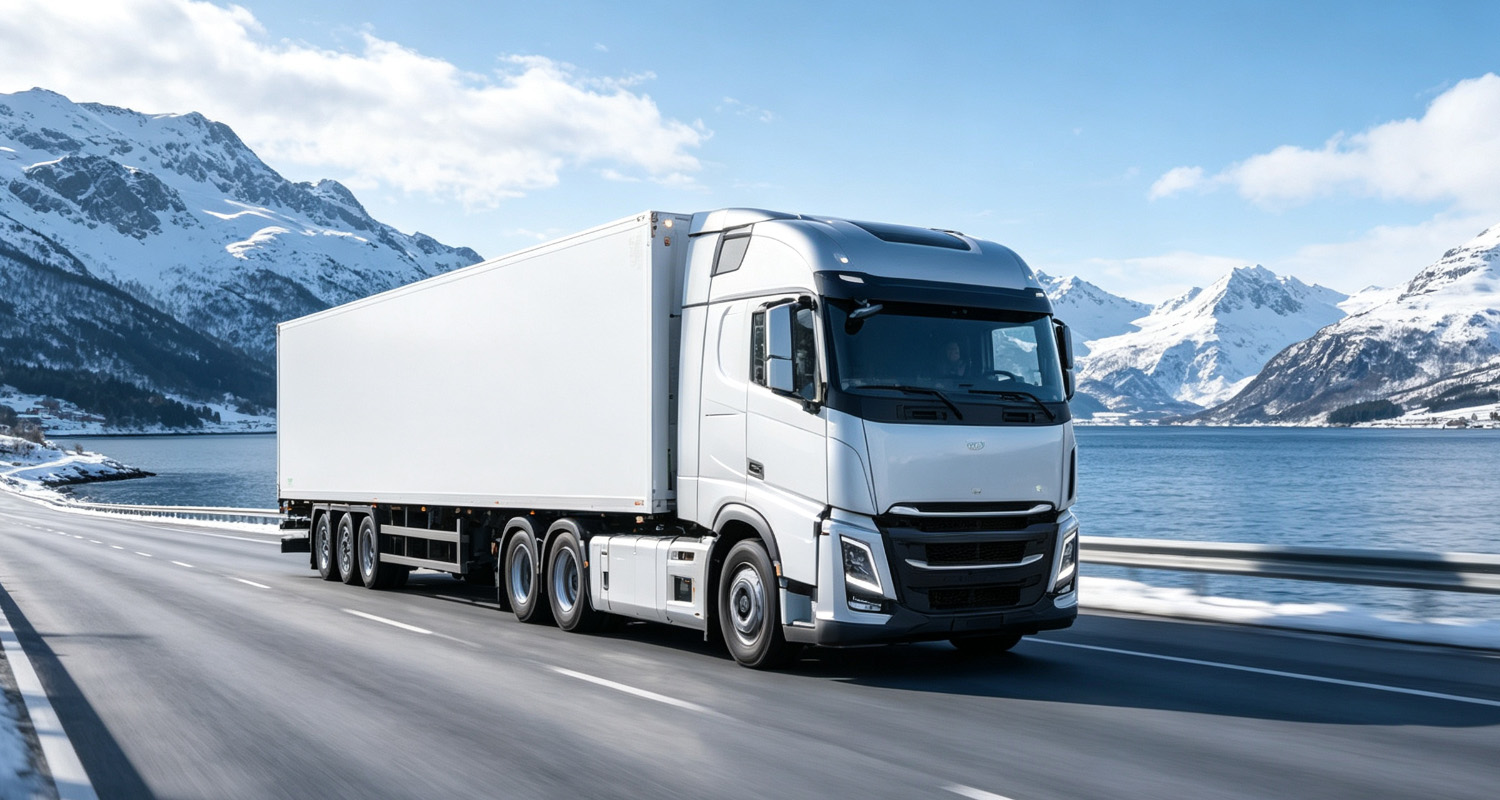
Unveiled at IAA Transportation 2026 in Hannover, Germany, TECTRANS II is designed for medium- and heavy-duty commercial vehicles and supports different vehicle architectures, energy requirements, and charging strategies.
From Bigger Batteries to a Modular Energy Platform
For long-haul electric trucks, battery capacity has always been a major challenge.
A larger battery can provide greater driving range, but it also adds weight, cost, charging requirements, and vehicle development complexity.
CATL is approaching the problem differently.
TECTRANS II uses standardized battery modules that can be configured according to the requirements of different commercial vehicles. The platform can support multiple battery configurations while maintaining standardized external dimensions, electrical interfaces, and communication protocols.
According to CATL, the platform can support a maximum driving range of up to 1,000 kilometers in its highest-capacity configuration. The heavy-duty version also reaches up to 170 Wh/kg gravimetric energy density.
This modular approach could become particularly important as battery technology continues to evolve.
Instead of completely redesigning a truck every time a new battery technology becomes available, manufacturers could potentially upgrade the battery system while retaining much of the existing vehicle architecture.
1,000 km Range Is Only Part of the Story
Long-range capability is important, but fleet operators are equally concerned about downtime.
A truck that can travel hundreds of kilometers but requires hours to recharge may still be difficult to integrate into demanding logistics operations.
CATL says the highest-capacity TECTRANS II configuration can achieve up to 1,000 km of range and charge to 80% in approximately 25 minutes using megawatt-level charging.
The system is also designed to achieve up to 96% round-trip efficiency, according to CATL.
These specifications target one of the central challenges of commercial EVs:
How can electric trucks maintain the utilization rate of diesel-powered vehicles?
For fleets operating continuously, every minute of downtime has an economic impact.
That is why charging technology alone may not be enough.
Battery Swapping Changes the Operating Model
Battery swapping introduces another possibility.
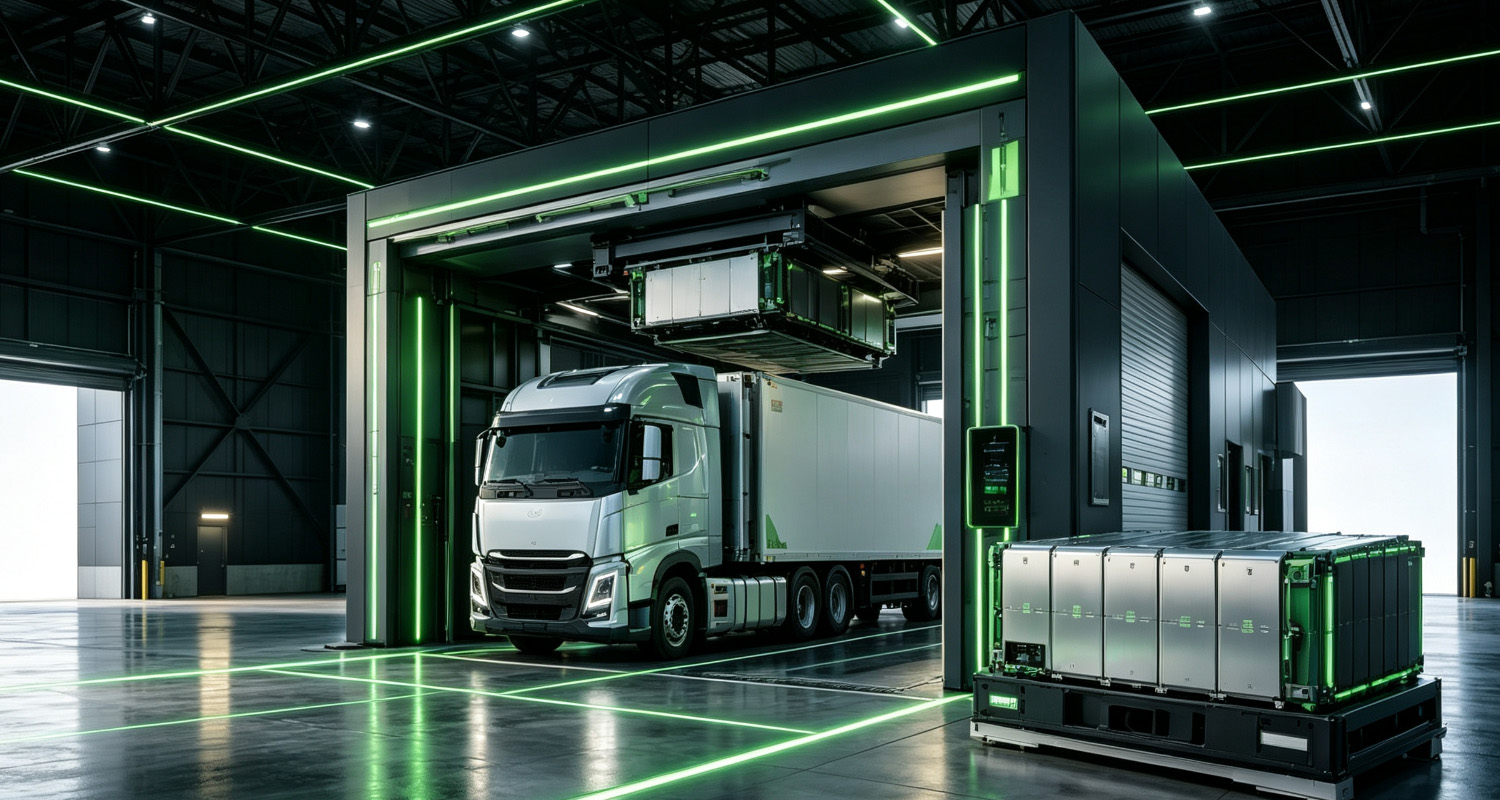
Instead of waiting for a large battery pack to recharge, an electric truck could enter a dedicated swap station, exchange its depleted battery for a charged one, and return to operation.
The concept is particularly attractive for heavy-duty trucks because their batteries can be significantly larger than those used in passenger vehicles.
CATL has already developed standardized battery solutions for commercial vehicles, while its broader battery-swapping strategy includes dedicated solutions for heavy-duty trucks. Previous CATL programs have already established battery-swapping infrastructure for commercial vehicles in China.
The key requirement is standardization.
If every truck uses a completely different battery architecture, battery swapping becomes difficult to scale.
But if multiple vehicle manufacturers can use compatible battery dimensions, electrical interfaces, communication protocols, and mechanical interfaces, the battery itself can become a standardized energy asset.
That is where CATL’s modular approach becomes particularly interesting.
Swaptopus: Connecting Trucks With the Energy Network
The development becomes even more significant when combined with Swaptopus, the initiative involving CATL and Octopus Energy.
The objective is to develop a European battery-swapping ecosystem for commercial trucks rather than treating charging as an isolated vehicle function.
The broader model could connect:
Electric Trucks
↓
Standardized Battery Packs
↓
Battery-Swap Stations
↓
Energy Storage
↓
Smart Energy Management
↓
Electricity Grid
This changes the definition of an EV charging station.
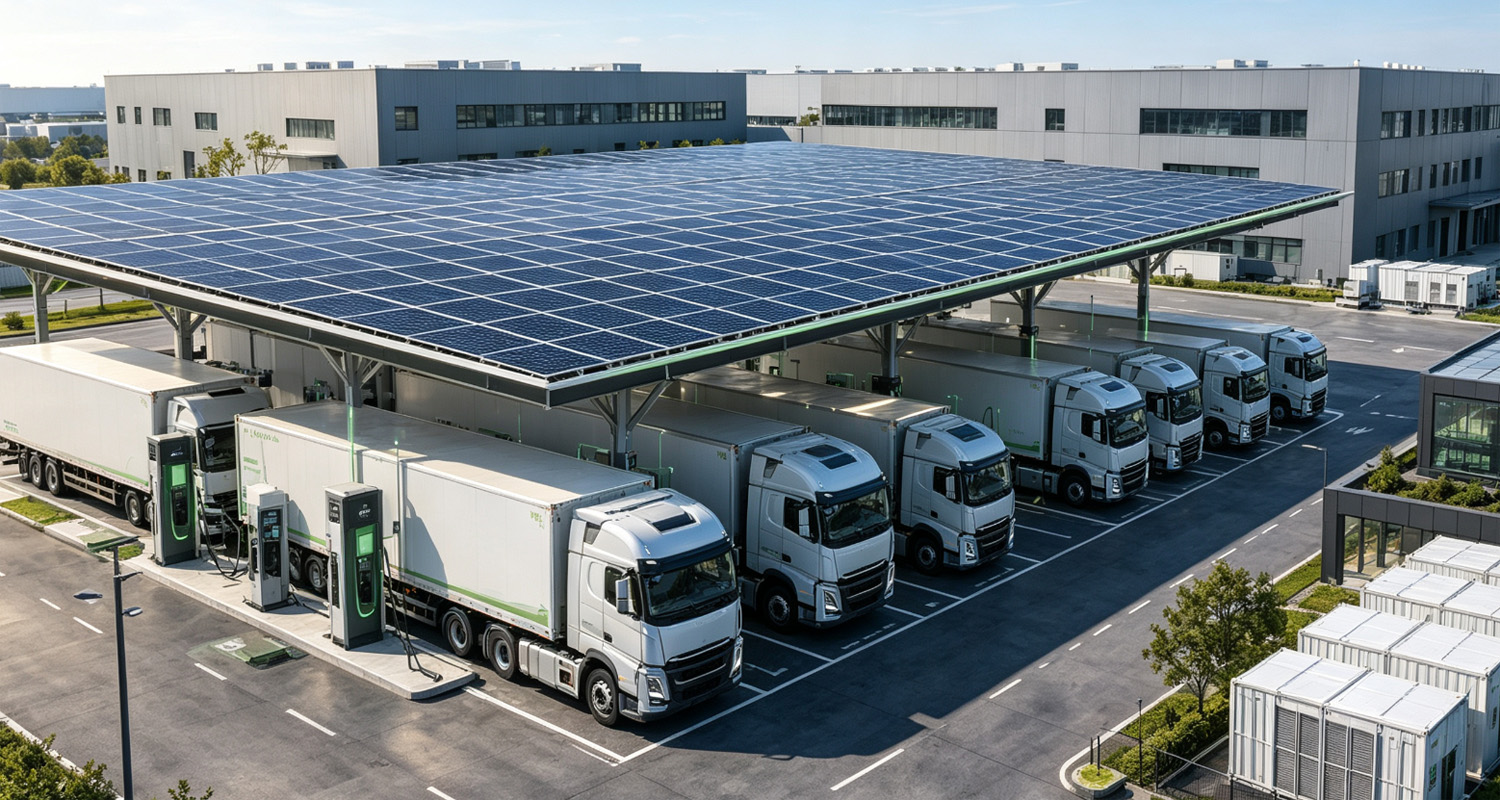
Instead of simply delivering electricity to a vehicle, an energy hub could potentially manage batteries, charging capacity, grid demand, renewable electricity, and fleet operations.
CATL and its partners have also announced cooperation involving DHL Group and other companies to explore integrated solutions covering vehicles, charging, energy storage, battery swapping, and lifecycle services.
Why This Matters for European Logistics
Europe’s freight industry presents a particularly demanding environment for electrification.
Long-distance trucks need:
- High daily mileage
- High vehicle utilization
- Predictable operating costs
- Fast energy replenishment
- Reliable infrastructure
- Long battery service life
- Flexible fleet management
A conventional passenger-EV charging model does not necessarily meet all of these requirements.
Commercial vehicles require infrastructure designed around logistics schedules rather than individual consumer charging habits.
This is why megawatt charging and battery swapping could develop as complementary solutions.
For predictable routes with sufficient charging windows, high-power charging may be practical.
For high-utilization fleets operating continuously, battery swapping could provide another way to minimize downtime.
Battery Standardization Could Become a Competitive Advantage
One of the most interesting aspects of TECTRANS II is therefore not simply its energy density or range.
It is the concept of standardization.
CATL says its modular platform can support both e-axle and central-drive architectures and allows manufacturers to switch between conventional charging and battery swapping.
The company also states that the modular platform could shorten vehicle development cycles by approximately 50% and reduce R&D costs by 60%–70%.
These figures should be viewed as CATL’s stated targets rather than independently verified industry results.
Nevertheless, the underlying strategy is significant.
The more standardized the battery interface becomes, the easier it may be for vehicle manufacturers, charging companies, fleet operators, energy companies, and battery-service providers to participate in the same ecosystem.
What Happens to the Battery After the Truck Leaves the Road?
Another important question is battery lifecycle management.
Commercial truck batteries represent substantial capital assets.
A battery may spend years inside a truck, but its useful life does not necessarily end when it is no longer suitable for demanding transportation applications.
Future commercial EV ecosystems could increasingly connect:
First Life → Truck → Fleet Operation → Battery Swap → Second-Life Energy Storage → Recycling
CATL’s TECTRANS II heavy-duty battery is designed for a claimed service life of up to 12 years or 1.5 million kilometers, with 70% capacity retention.
Longer service life could improve the economics of commercial EVs while also creating opportunities for battery monitoring, repair, refurbishment, second-life energy storage, and recycling.
The Next Opportunity: Power Electronics
The battery is only one part of an electric commercial vehicle.
As battery systems become more modular and intelligent, the surrounding power electronics become increasingly important.
An electric truck requires a complete energy-conversion architecture involving:
- On-board charging
- DC/DC conversion
- High-voltage power distribution
- Battery management
- CAN communication
- Thermal management
- Auxiliary power systems
- Charging control
- Energy monitoring
This is where power-electronics suppliers can play an important role in the next stage of commercial vehicle electrification.
A highly efficient OBC can reduce charging losses.
A reliable DC/DC converter can provide stable low-voltage power for vehicle electronics and auxiliary systems.
Intelligent CAN communication can allow the charger, BMS and vehicle controller to exchange real-time operating information.
For commercial vehicles operating in demanding environments, protection levels, thermal performance, reliability, and serviceability can be just as important as peak power.
The Bigger Picture
CATL’s TECTRANS II launch suggests that electric trucking is moving beyond the simple question of:
“How large should the battery be?”
The more important question may become:
“How should the entire energy system of a commercial vehicle operate?”
A future electric truck ecosystem could combine long-range batteries, megawatt charging, battery swapping, standardized interfaces, smart energy management, renewable power, energy storage, and lifecycle battery services.
Swaptopus represents one possible direction for this ecosystem in Europe.
Whether battery swapping becomes a mainstream solution will depend on infrastructure investment, vehicle compatibility, fleet economics, regulations, and the willingness of multiple manufacturers and operators to adopt common standards.
But the direction is becoming increasingly clear.
The future of electric trucking may not be built around one technology.
It may be built around an integrated energy platform.
And for companies developing OBCs, DC/DC converters, BMS communication systems, charging infrastructure, and commercial vehicle power electronics, this transition creates a much larger technology opportunity beyond the battery itself.
The electric truck is becoming more than a vehicle. It is becoming a mobile energy platform.
Post time: Sep-17-2026


