


How Long Do Electric Vehicle Batteries Actually Last?
The lifespan of electric vehicle (EV) batteries has far exceeded initial expectations. While early owners feared that expensive battery replacements would be necessary within just a few years, the accumulation of data and technological advancements have revealed a much more optimistic reality.
Key Data and Facts
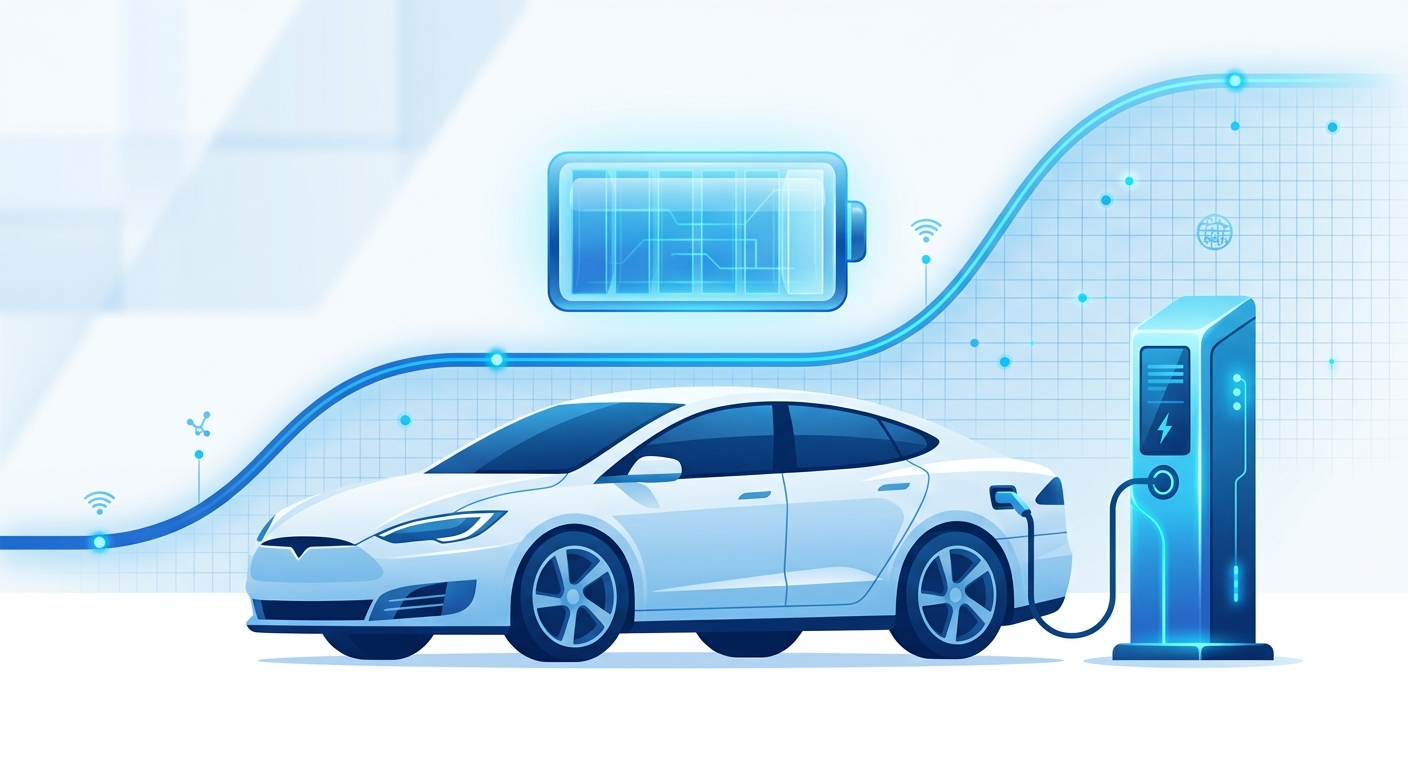
• The Degradation Curve (S-Curve): Battery degradation is not linear. Research from Recurrent indicates that battery performance follows an “S-curve”—an initial, minor, and relatively rapid decline, followed by a long, stable plateau, and finally a sharp drop-off as the battery nears the end of its life.
• Excellent Condition of Late-Model Used EVs: Auction data from Cox Automotive shows that the battery health scores for 2- to 4-year-old used EVs are generally above 95%. Among nearly 80,000 EVs tested, the average battery health score was as high as 92%.
• Rare Replacements in Older Vehicles: Among vehicles 10 years old or older, only 8.5% have had their batteries replaced; more than 90% of these older EVs are still running on their original batteries.
• Strong Performance at High Mileage: Vehicles that have traveled over 150,000 miles (approx. 240,000 km) without a battery replacement still retain at least 83% of their original range.
• Defects as the Primary Reason for Replacement: When battery replacements occur early on, it is typically due to manufacturing defects in individual units—issues that are generally covered by the manufacturer’s official warranty (often 8 years/100,000 miles).
Why Are Batteries More Durable Than Expected?
1. Thermal Management and Software Optimization: Engineers have developed active thermal management systems and sophisticated battery management software, which effectively slow down early-stage degradation and maintain consistent range.
2. Overly Extreme Laboratory Testing: Traditional testing methods—which involve frequent full-charge and full-discharge cycles—are far more taxing on batteries than real-world driving. Research from Stanford University suggests that the stop-and-go nature of everyday driving (involving acceleration and regenerative braking) is actually gentler on batteries, allowing them to “age more gracefully” in real-world conditions. 3. Continuous Technological Evolution: Newer vehicle models incorporate more advanced software and more durable battery chemistries, such as lithium iron phosphate (LFP). Industry experts have even noted, “These batteries are designed to outlast the vehicles themselves.”
3 Tips for Extending the Lifespan of Your EV Battery
• Avoid Heat: High temperatures are the enemy of batteries. In hot climates, try to park in the shade or in a climate-controlled garage.
• Avoid Extreme Charge Levels: For daily commuting, it is best to keep the battery charge within a moderate range (e.g., 20%–80%), reserving a 100% charge only for long-distance trips.
• Limit Fast Charging: Frequent DC fast charging is a major stressor that accelerates battery degradation; rely more on slower (AC) charging for your day-to-day needs.
Post time: Nov-10-2026


